When Your Furnace Stops Working Right
Furnace Repair in Elliottsburg for systems that have stopped heating, short-cycling, or running without producing warmth
A furnace that runs continuously without reaching the set temperature, or one that shuts off before a heating cycle completes, is telling you something specific is wrong—not just that the unit is aging. NordicAir handles furnace repair in Elliottsburg, diagnosing the mechanical and electrical conditions behind those failure patterns rather than defaulting to a parts swap. Many homes in Perry County were built during eras when furnaces were sized generously for large, less-insulated interiors, and those older systems often develop distinct failure modes at the heat exchanger, draft inducer, or control board long before the cabinet itself gives out.
When NordicAir arrives for a furnace repair, the diagnostic process starts with the sequence of operation—confirming that the thermostat signal, inducer motor, ignition, and gas valve are each responding in the correct order. A flame that lights but immediately drops out, for instance, points toward a flame sensor issue rather than a gas supply problem, and those two situations require completely different approaches. Understanding that sequence prevents unnecessary part replacement and identifies what is actually failing in the system.
Arrange a diagnostic visit with NordicAir to identify exactly what is causing your furnace to underperform before the problem compounds.
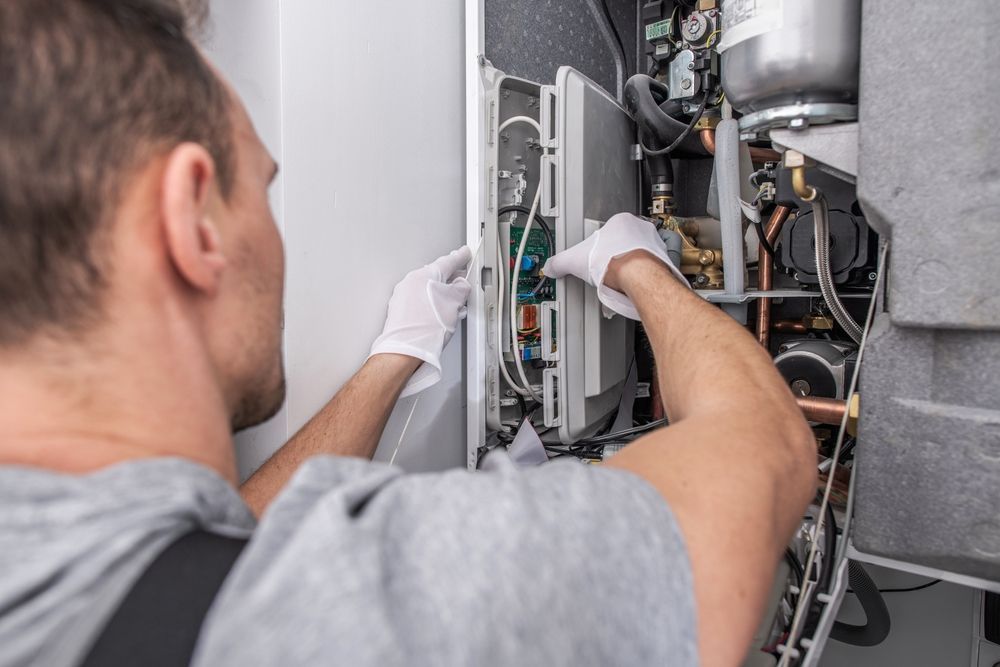
How Furnace Repair Addresses the Actual Failure
Furnace repair involves isolating which component in the combustion and air-handling chain has failed or degraded. The inducer motor, heat exchanger, pressure switches, gas valve, ignitor, and control board each play a specific role, and a fault in any one of them disrupts the entire sequence. NordicAir evaluates each stage rather than testing only the most accessible components, which is how intermittent failures—the ones that don't show up on demand—get properly identified.
Once the repair is complete, you should notice that heating cycles start cleanly, run for a normal duration, and bring the space to the thermostat's set point without the blower running well past the end of a cycle. A furnace that previously short-cycled or produced lukewarm airflow will move noticeably warmer air through the registers, and the system should remain quiet through both startup and shutdown. Those are the observable indicators that the repair addressed the root failure rather than a symptom.
The age and model generation of the furnace also affects what parts are practical to source and whether a repair makes sense compared to other options. NordicAir will tell you specifically what was found, what was corrected, and what condition the remaining components are in—so you have the information needed to make a clear-eyed decision about next steps.
Answers About How Furnace Repair Works
Furnace problems tend to raise practical questions about what is actually wrong and what the repair involves. These answers focus on the work itself.
What does a furnace diagnostic actually check?
A technician works through the sequence of operation—thermostat call, inducer startup, pressure switch confirmation, ignition, and gas valve opening—verifying that each stage triggers the next correctly and that the flame sensor is reading the burner accurately.
How does a cracked heat exchanger affect furnace operation?
A cracked heat exchanger allows combustion gases to mix with supply air, which typically causes the high-limit switch to trip and shut the system down mid-cycle—so repeated short-cycling on a forced-air furnace is one of the first observable signs of exchanger failure.
Why does a furnace ignite but then shut off within seconds?
The flame sensor, a small rod positioned in the burner flame, measures electrical current through the flame to confirm combustion; when it is coated with oxidation, it cannot read the flame reliably and signals the control board to cut gas as a safety response.
What should you check before calling for a repair?
Confirm the filter is not completely blocked, that the power switch on the furnace cabinet is on, and that the thermostat is set above the current room temperature—a clogged filter alone can trigger high-limit shutdowns that mimic component failure.
How do older furnaces found in Elliottsburg-area homes affect repair decisions?
Properties built in the mid-twentieth century often have furnaces with cast-iron heat exchangers or standing-pilot systems that require different parts sourcing and different diagnostic approaches than current-generation induced-draft units, so the technician's familiarity with older equipment matters for accurate diagnosis.
NordicAir is available to walk through what your furnace is doing and what a repair would involve based on the specific unit and its condition. Contact NordicAir directly to schedule a diagnostic assessment of your heating system.