Boiler Systems Installed With Specialist Knowledge
Boiler Installation in Elliottsburg for properties converting to hydronic heat or replacing equipment that no longer holds pressure or distributes evenly
Hydronic heating systems distribute heat through water rather than air, which means the boiler at the center of that system must be sized, piped, and controlled with precision that forced-air equipment simply does not require. NordicAir installs boilers in Elliottsburg with a particular focus on Velocity brand boilers, a line known for compact footprint and high-efficiency heat exchange design that makes it practical to retrofit into older mechanical rooms where space is limited. Homes in Perry County with original radiator systems or radiant floor panels are strong candidates for a boiler installation that updates the heat source while preserving the distribution infrastructure already in the walls and floors.
The installation sequence for a Velocity boiler begins with an assessment of the existing piping configuration, expansion tank sizing, and zone valve layout. Velocity units use a fire-tube heat exchanger that requires specific supply and return water temperature parameters to operate at rated efficiency, so the system's piping must be reviewed and adjusted to match those parameters before the unit is commissioned. NordicAir works through that compatibility evaluation as part of the installation rather than treating it as a separate project.
Arrange a site evaluation with NordicAir to review your existing piping layout and confirm which Velocity boiler configuration fits your heating system.
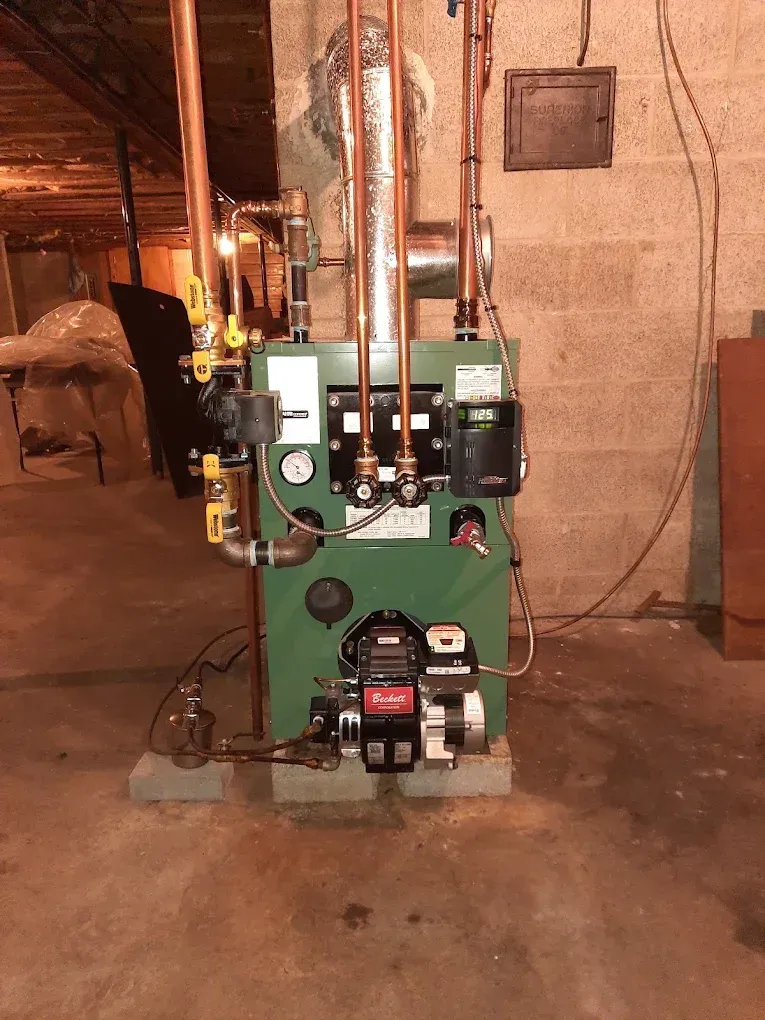
Why Boiler Selection and Setup Affects Long-Term Performance
Boiler installation involves matching the unit's output and operating parameters to the demands of the distribution system it will serve. A boiler set to operate at temperatures that are too high for a low-temperature radiant floor system will cycle short and accumulate condensation in the heat exchanger; one set too low for a cast-iron radiator system will leave the radiators lukewarm regardless of runtime. NordicAir calibrates the Velocity unit's operating parameters to the specific distribution type during commissioning rather than applying a default setting.
Once the installation is complete and the system reaches operating temperature, the distribution should produce consistent, even heat across all zones without pressure fluctuations at the expansion tank or air pockets developing in the lines. Radiators that previously ran unevenly—hot at one end, cold at the other—typically indicate air in the system or improperly balanced zone flow; a correctly commissioned installation eliminates both conditions. The Velocity boiler's controls also allow setpoint adjustment based on zone demand, which becomes visible as more responsive zone behavior compared to older single-setpoint equipment.
The choice between a standalone boiler and a combi unit that also handles domestic hot water is worth discussing during the planning phase, because the piping and control requirements for each are different and the right answer depends on the home's hot water demand relative to its heating load. NordicAir covers both configurations within the Velocity product range.
Common Questions About This Service
Boiler installation raises specific technical questions about how the system is configured and what the commissioning process involves. The following addresses the most practical of those questions.
What is involved in commissioning a new boiler after it is installed?
Commissioning includes filling and purging the system of air, setting the operating temperature and pressure parameters, verifying zone valve function, and confirming that the expansion tank is correctly pre-charged for the system volume.
How does a Velocity boiler differ from conventional cast-iron boilers in terms of installation requirements?
Velocity units use a fire-tube stainless heat exchanger with higher thermal efficiency, which requires proper low-temperature return water to prevent condensation damage—older cast-iron systems designed for high-temperature operation may need piping modifications to protect the new equipment.
Why does expansion tank sizing matter in a boiler installation?
An undersized expansion tank cannot absorb the pressure increase that occurs as water heats and expands, causing the pressure relief valve to open repeatedly—correctly sizing the tank for the system's water volume is a step that directly affects long-term reliability.
How does the construction of older Elliottsburg-area homes affect boiler installation planning?
Properties with original gravity-fed or early pumped hydronic systems often have two-pipe configurations and large-volume cast-iron radiators that require higher flow rates and temperature settings than modern panel or radiant systems, which affects how the new boiler's controls are configured.
What maintenance does a newly installed boiler require in its first year of operation?
The system should be checked for air accumulation in the first heating season, the pressure and expansion tank condition should be verified, and the flue and condensate drain should be inspected to confirm they are operating as designed.
NordicAir is the point of contact for Velocity boiler installations in Elliottsburg. To begin the planning process, connect with NordicAir and schedule a review of your property's existing heating infrastructure.