
Sealed Connections That Stop Wasting Conditioned Air
Ductwork Repair in Elliottsburg for damaged, disconnected, or deteriorated ducts interfering with proper air distribution
Ducts that have pulled apart at connections, developed holes from physical damage or rust-through, or collapsed due to inadequate support waste conditioned air and create uneven temperatures between rooms. You might notice weak airflow from certain registers, rooms that never reach the thermostat setting, or dust accumulation near supply vents that suggests air is leaking into wall cavities or crawlspaces before reaching its intended destination. NordicAir repairs damaged ductwork in South Central Pennsylvania and Elliottsburg when inspection reveals disconnected joints, visible gaps at seams, crushed or kinked flex duct, or deteriorated insulation that exposes metal ducts to temperature extremes in unconditioned spaces.
Ductwork problems often remain hidden in basements, attics, or crawlspaces until comfort issues become severe enough to prompt investigation. A single disconnected joint can dump hundreds of cubic feet per minute of conditioned air into a space where it provides no benefit, forcing your HVAC equipment to run longer to compensate for the lost airflow.
Arrange an inspection to identify where your duct system is losing air and what repairs will restore proper distribution throughout your home.
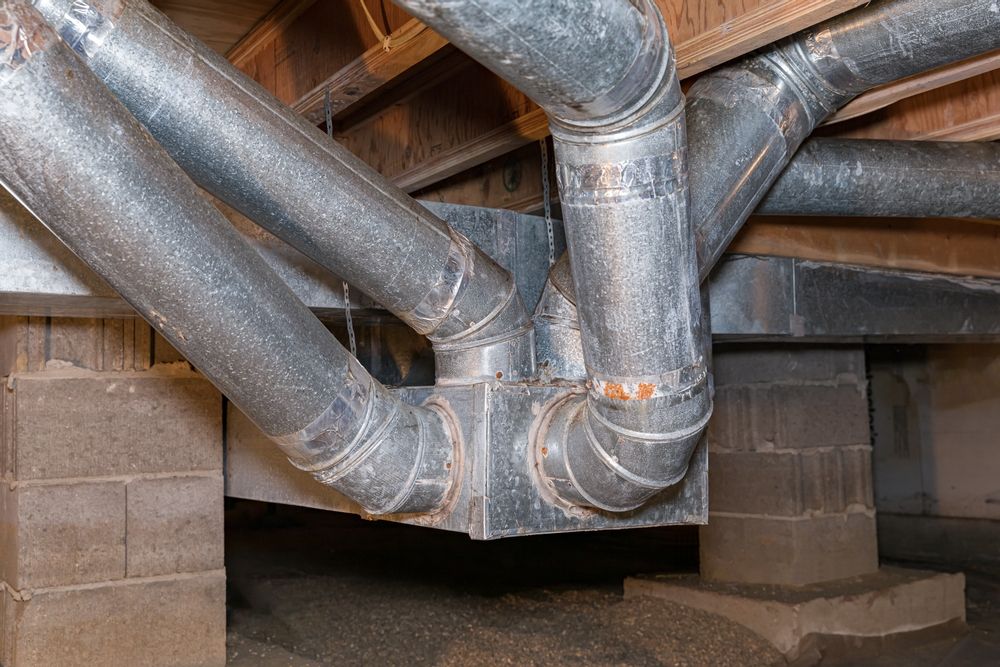
Why Duct Damage Happens and How to Stop It
Ductwork fails when connections weren't properly sealed during original installation, when building settlement or vibration from HVAC equipment causes joints to separate over time, when sharp objects or stored items damage flex duct in accessible areas, or when rodents chew through insulation and duct material in pursuit of nesting sites. Repairs involve resealing joints with mastic and mechanical fasteners, replacing damaged duct sections, adding support strapping where ducts have sagged, and sometimes rerouting runs that were poorly located or inadequately protected.
After ductwork repairs are finished, airflow equalizes across all registers so that rooms reach set temperatures at similar rates, the furnace or air handler runs for shorter cycles because conditioned air actually reaches living spaces instead of leaking into wall cavities, and dust infiltration decreases because negative pressure no longer pulls unconditioned air through gaps in the building envelope. These changes become noticeable within the first few operating cycles after the duct system is sealed and reconnected.
Some ductwork problems require more than simple reconnection—crushed ducts must be replaced to restore airflow capacity, deteriorated insulation in unconditioned spaces needs replacement to prevent condensation and energy loss, and poorly designed duct layouts may need sections rerouted to reduce resistance and improve air distribution. Testing with a duct blaster can quantify total leakage and help prioritize which repairs will have the greatest impact on system performance.
Questions Before Starting Your Project
Ductwork repair raises questions about what's causing airflow problems, how damage is located, and whether repair or replacement makes more sense for aging duct systems.
What causes weak airflow from registers in certain rooms?
Weak airflow typically results from disconnected duct joints that dump air before it reaches the register, crushed or kinked flex duct that restricts flow, or undersized ducts that cannot deliver adequate volume, though a clogged air filter or failing blower motor can produce similar symptoms throughout the entire system.
How are duct leaks and damage located in inaccessible areas?
Locating hidden duct problems involves visual inspection of accessible ductwork in basements and crawlspaces, airflow measurement at each register to identify runs delivering less air than expected, and sometimes pressurizing the duct system with a blower door test that reveals where air escapes into unconditioned spaces.
What does ductwork repair actually involve?
Repair work includes resealing separated joints with mastic and foil-backed tape, replacing torn or crushed flex duct sections, adding sheet metal screws at connections that have pulled apart, installing additional support strapping where ducts sag, and replacing damaged insulation on ducts running through unconditioned areas.
When should deteriorated ductwork be replaced rather than repaired?
Replacement becomes more practical when widespread rust has weakened metal ducts throughout the system, when asbestos-wrapped ducts require containment procedures if disturbed, or when the existing duct layout is so poorly designed that modifying it costs nearly as much as installing new ductwork with proper sizing and routing.
Why do uneven room temperatures persist even after visible duct damage is repaired in Elliottsburg homes?
Temperature imbalances can result from duct sizing problems that repair cannot fix, inadequate return air pathways that create pressure imbalances, or building envelope issues like missing insulation and air leakage that overwhelm what the duct system can deliver, which means that some comfort problems require addressing multiple factors beyond ductwork alone.
NordicAir inspects ductwork to identify specific damage points and provides repair recommendations based on your system's condition. Contact our team to schedule a duct system evaluation and discuss which repairs will restore proper air distribution.