Boiler Problems Diagnosed at the Source
Boiler Repair in Elliottsburg for systems losing pressure, failing to fire, or producing uneven heat across zones
Pressure loss that recurs without a visible leak, zones that stay cold while others run normally, and a boiler that locks out on a fault code it resets from but repeats—these are the patterns that signal something specific has failed rather than something that will resolve on its own. NordicAir handles boiler repair in Elliottsburg, working through the mechanical and control systems that govern how a hydronic heating system operates. Properties in the area that were built with original radiator infrastructure or later retrofitted with radiant floors represent distinct system types, and each one has failure patterns that require familiarity with how hydronic distribution actually works under load.
The diagnostic process for a boiler repair starts with reading the system's current pressure, checking the expansion tank for waterlogging, and reviewing any fault codes the control board has stored. A waterlogged expansion tank, for instance, is one of the most common causes of chronic pressure relief valve discharge—the tank can no longer absorb thermal expansion, so pressure spikes every time the system heats up and the relief valve opens to compensate. Identifying that pattern correctly prevents the relief valve from being replaced when the expansion tank is the actual problem.
Set up a diagnostic appointment with NordicAir to have your boiler's pressure, controls, and zone operation reviewed before the problem progresses further.
The Difference Between Symptom Repairs and Root Cause Repairs
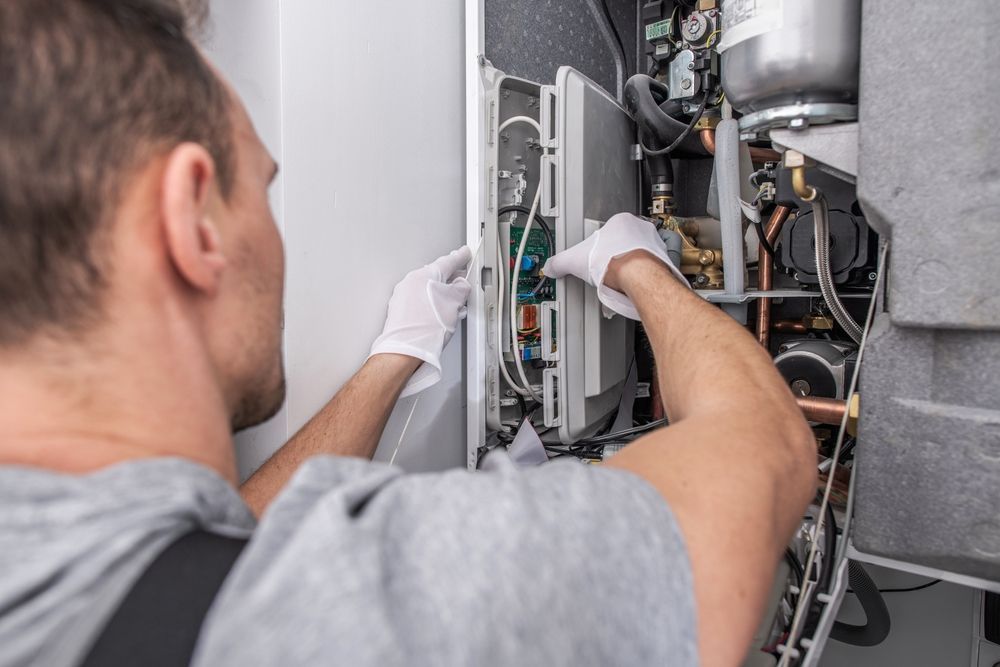
Boiler repair requires distinguishing between a failed component and the condition that caused it to fail. A burned-out circulator pump on a system with chronic high pressure will fail again if the pressure issue is not resolved first. NordicAir works through the sequence of possible causes—expansion tank condition, fill valve behavior, zone valve function, control board outputs—before confirming which component is responsible for the observed failure, rather than replacing the most accessible part and hoping the symptom disappears.
After a repair addresses the root issue, you should notice that the system maintains steady operating pressure through a full heating cycle, that all zones reach their target temperature in normal sequence, and that the boiler completes its firing cycle without locking out on a safety fault. Radiators that were previously cold on one end but hot on the other—a sign of air or flow restriction in that circuit—should distribute heat evenly once the underlying cause is corrected. Those are the observable signs that the repair addressed the system rather than just the visible symptom.
The age and model of the boiler also affects parts availability and whether certain repairs are practical. NordicAir will communicate clearly about what was found, what was corrected, and what the condition of adjacent components looks like—so decisions about further work are based on actual findings rather than estimates.
Questions Before Starting Your Repair
Boiler repair involves a different set of decisions than forced-air system work, and the questions that come up reflect the specific characteristics of hydronic systems. These answers address the work itself.
How does a technician determine whether a pressure relief valve needs replacement or is responding to another problem?
The technician checks the expansion tank's pre-charge pressure and internal condition first—if the tank is waterlogged, it is the cause of repeated valve discharge, and replacing only the valve will not prevent the pattern from continuing.
What causes a boiler zone to stop heating even when the main unit is firing?
A failed zone valve that is not opening on demand, a seized circulator on that circuit, or air trapped in the zone's supply line are the most common causes, and each requires a different corrective step to restore flow to that circuit.
Why does a boiler that fires normally sometimes lock out on a temperature limit fault?
High-limit lockouts occur when water temperature in the heat exchanger exceeds the safety threshold—common causes include a circulator that has stopped moving water through the system or a buildup of scale inside the exchanger that is reducing heat transfer to the water.
How does the piping layout in older Elliottsburg-area properties affect boiler repair decisions?
Properties with original gravity-flow or early series-loop piping do not always have individual zone shutoffs, which means isolating one circuit for repair sometimes requires draining a larger portion of the system—a factor that affects how the repair is sequenced.
What is the correct way to re-pressurize a boiler after a repair that required draining the system?
The fill valve is opened until the system reaches the manufacturer's specified cold-fill pressure, typically in the range of twelve to fifteen PSI, and then the system is purged of air through the bleed points on each zone before the boiler is fired again.
NordicAir also performs boiler repairs in surrounding communities throughout the region. To move forward, contact NordicAir directly and describe what the system is doing so the diagnostic visit can be prepared accordingly.